
THE TRIASSIC PALEONTOLOGY IN THE 21st CENTURY:
NEWS AFTER THE FIRST QUARTER
State of the art of the major Triassic paleontological novelties of the last 25 years
May 25th – 30th, 2026
Agordo (Dolomites, Italy)
FOURTH CIRCULAR
Supported by:
Dipartimento di Geoscienze, Università degli Studi di Padova Fondazione Dolomiti UNESCO
Geological Museum of Peking University TRIASSICA Institute for Triassic Fossil-Lagerstätten
Gruppo Agordino Mineralogico Paleontologico GAMP Dolomiti Comune di Agordo

Dear colleagues,
The first quarter of the 21st century has witnessed an incredible explosion of knowledge about Triassic biodiversity.
The Triassic Period is marked by a succession of major bioevents that shaped the evolution of life on Earth. These include the biotic recovery following the end-Permian mass extinction and its interplay with the onset of the Mesozoic Marine Revolution, the Carnian Pluvial Episode with its profound climatic and ecological consequences, and the fluctuating but overall declining biodiversity of the Norian–Rhaetian interval, culminating in the end-Triassic mass extinction. In recent years, our understanding of these pivotal transitions has significantly improved thanks to the restudy of historical assemblages, discovery of new fossil localities, and the application of innovative, quantitative analytical methods, which have provided fresh insights into the tempo and mode of Triassic evolutionary dynamics.
This congress aims to cover all branches of Triassic paleontology: from terrestrial and marine invertebrates and vertebrates to paleobotany and palynology, from micropaleontology to paleoichnology, from paleogeography to paleoecology and more. The diversity of contributions aims to strengthen the interdisciplinary nature of Triassic research, in order to offer a more complete understanding of Triassic ecosystems.
We look forward to welcoming you here to present the state of the art of your research, illustrate the progress made over the past 25 years, and fostering discussions on the future directions of Triassic paleontological research.
Welcome to the Dolomites! Welcome to Agordo!
1. Transportation – How to Reach Agordo

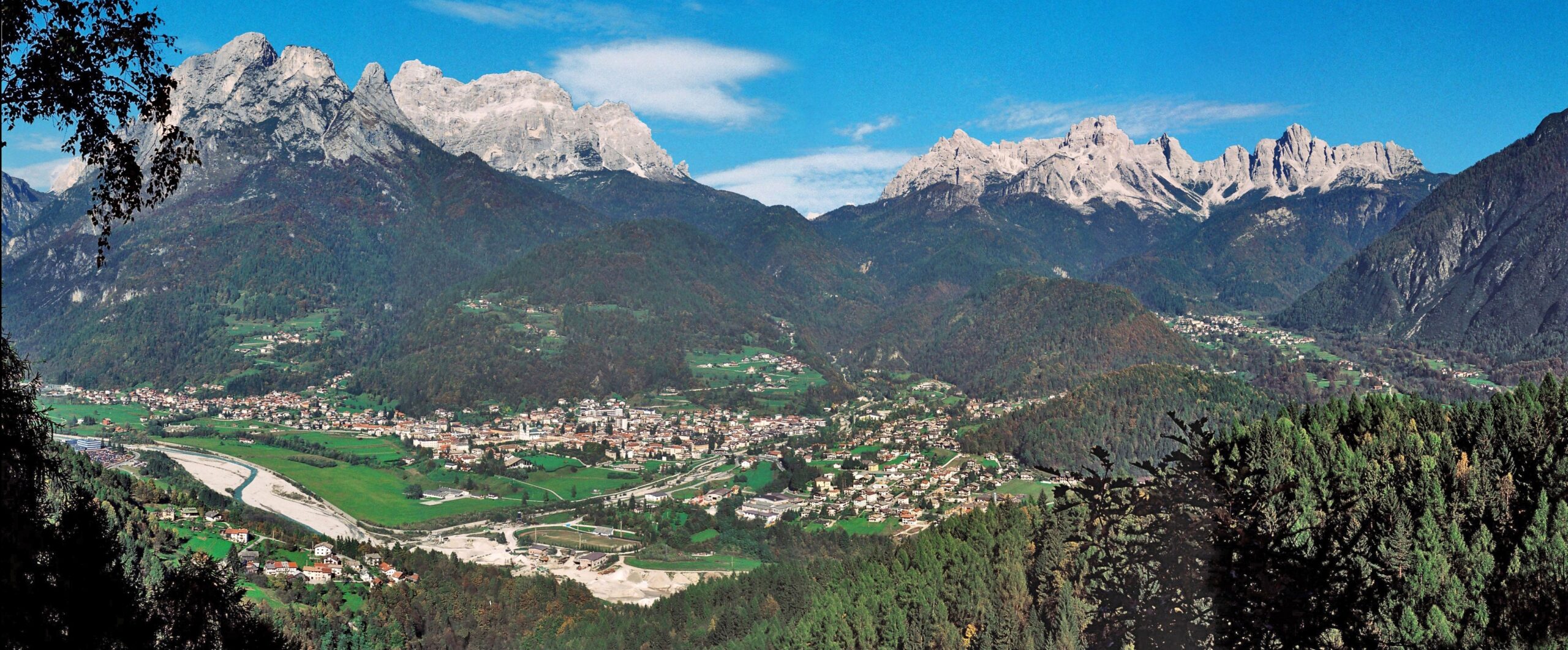
Agordo is located in the Belluno province of northern Italy, in the heart of the Dolomites. Below are the recommended travel options for reaching the town by public and private transportation.
By Air – The nearest international airports are:
- Venice Marco Polo Airport (VCE) – approx. 130 km (2h drive)
- Verona Valerio Catullo Airport (VRN) – approx. 200 km (3h drive)
- Milan Malpensa Airport (MXP) – approx. 370 km (4h drive)
- Milan Orio al Serio Airport (BGY) – approx. 300 km (3h 30m drive)
Conference Shuttle Service – To facilitate travel to Agordo, we have arranged a conference shuttle bus on Monday, May 25, 2026, which will pick up participants at the following airports: Milan Malpensa (MXP), Milan Orio al Serio (BGY), Venice Marco Polo (VCE), Verona Valerio Catullo (VRN).
The shuttle will depart from Milano in the morning after collecting all registered participants and will travel to Agordo. At the end of the conference, on the final day of the field trip, the bus will return participants to the airports. To use this service, reservation is required. Please contact the organizing committee in advance to secure your spot.
In case you prefer to get to Agordo on your own, here you find other options:
By Public Transport – The closest major railway station is Belluno, which is connected to Venice and Padua, you may take a Trenitalia train. Each main airport is connected to the nearest railway station by local buses. Once arrived at Belluno, Agordo can be reached either by the regular DolomitiBus services operating between Belluno and Agordo (approx. 50 minutes), or by Taxi or Rental Car: Available at the station for direct transfer.
By Car – For those traveling by car, Agordo is accessible via:
- From Venice/Treviso: Take the A27 motorway north to Belluno, then follow SS203 towards Agordo.
- From Verona: Take the A4 motorway towards Venice, then the A27 north to Belluno, followed by SS203.
- From Milan: Take the A4 motorway towards Venice, then the A27 north to Belluno, followed by SS203.
Free parking is available in and around the conference venue.
2. Accomodation
To assist participants in planning their stay, we have prepared a dedicated list of accommodations in Agordo and nearby villages, including both hotels and apartments with their address and contacts.
We recommend starting your search on major booking platforms such as Booking.com, Airbnb, Expedia, Ospitalità Diffusa, and similar websites. However, since some accommodations are not listed online or may sell out quickly, we strongly suggest that you also consult the accommodation list we have prepared. Should you not find availability online, please contact the properties in the list directly.
Please note that the popular tourist areas of Falcade and Alleghe, which offer a wider range of hotels, are located relatively close to Agordo. However, staying in these towns requires access to a car or using the DolomitiBus public bus lines to reach the congress venue in Agordo (both villages at 20 km and 20 min from Agordo).
As the congress takes place in the Dolomites during the start of the summer tourist season, we strongly advise booking your accommodation several months in advance, as availability may be limited closer to the dates of the event.
Here you can download a general tourist map of Agordo. A shuttle service will operate around Agordo to facilitate your local transportation between your accommodation (only among those from the provided list) and the congress venues.
Agordo city map

Conference venue: Sala Don Ferdinando Tamis, Via XXVII Aprile 5, 32021 Agordo (BL)

Italian and Ladin for beginners
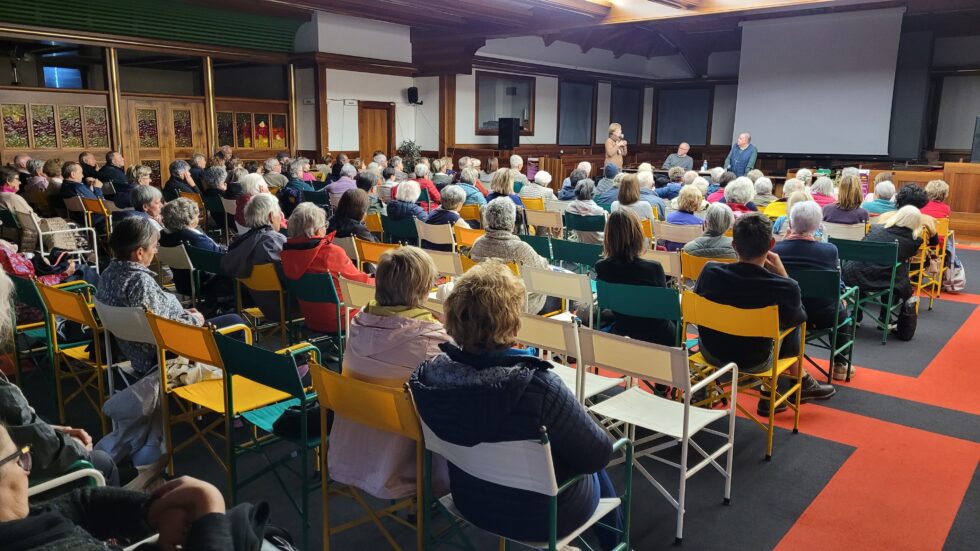
First time in the Dolomites and nervous about speaking to locals? Don’t worry—but be ready for a slightly different experience compared to larger cities. Agordo is a small mountain town where tourism is present but less than in major destinations. People working in hotels, restaurants, and mountain huts usually understand some English, but it’s far from guaranteed: outside tourist settings, locals speak only Italian and Ladin*. Knowing a few basic phrases makes a big difference and is always appreciated! We’ve put together a short list of useful expressions to help you connect with locals and confidently order a warm plate of polenta, some canederli, or a slice of apple strudel.

*That’s right: the Ladinian stage of the Middle Triassic takes its name from the Ladin language spoken in the Dolomites. This is where some of the first and most important geological studies on rocks of this age were carried out in the 19th century (Bittner 1882).
3. Examples of Topics & Abstracts
- Overviews of newly discovered and significant fossil sites from around the world
- Insights into the recovery dynamics and evolutionary trajectories
- Advances in the understanding of Triassic ecosystems, taphonomic processes, and paleoenvironmental reconstructions
- New perspectives on animal behavior and environmental interactions during the Triassic.
Talks, slides, and posters should be in English.
Here you can download the template for the abstracts
Please note that the Preferred Presentation Type (Talk or Poster) that you select when submitting your abstract may be changed at the discretion of the Scientific Committee. We appreciate your understanding and cooperation.
Instructions for talks: |Duration: 15 min (ca. 12/13 min + 2/3 min for questions |
Oral presentations (talks) should preferably be uploaded during registration on Monday afternoon (May 25th). Files are preferable in PowerPoint .ppt/pptx format. Alternatively, PDF is possible. Computers will be available at the registration desk for this purpose and a conference assistant will support you.
Instructions for poster: |Poster size: A0 84.1 x 118.9 cm|
Posters will be displayed in a reserved area of the conference venue. They should preferably be mounted on Monday afternoon (May 25th) or on Tuesday morning (May 26th), and will remain on view until Thursday (May 28th). Poster sessions will take place during coffee and lunch breaks. Conference assistants will assist in putting up or taking down the posters. Please note that the organizers are not able to provide printout of posters.
4. Organization
- Organization committee
Davide Conedera (UniPD, GAMP), Luca D’Arsié (GAMP), Manuel Conedera (GAMP), Danilo Giordano (Amici dei Minerari), Roberto Gatto (UniPD), Stefano Monari (UniPD), Manolo Piat (GAMP, Museo Selva di Cadore), Andrea Tintori (TRIASSICA)
- Scientific committee
Stefano Dominici, Nick Fraser, Roberto Gatto, Danilo Giordano, Hans Hagdorn, Da-yong Jiang, Evelyn Kustatscher, Paolo Mietto, Stefano Monari, Matteo Montagna, Ryosuke Motani, Nereo Preto, Manuel Rigo, Guido Roghi, Jaroslaw Stolarski, Andrea Tintori.

5. Registration fee
Registration is made via e-mail to organisers’ contacts:
davide.conedera@phd.unipd.it | paleo.tintori@outlook.it | lucadarsie01@gmail.com
Early Bird | January 31st, 2026
Standard Registration | from February 1st, 2026
Included:
- Access to all scienti!c sessions.
- Shuttle service between the Congress venue and your accommodation of the provided list
- Buffet lunches and coffee breaks on days 2 and 4
- Participation field excursion and lunch day 3
- Conference dinner on day 4-
NOT included:
Optional services to be paid during registration:
- Shuttle service from the airport to Agordo on Monday (€50)
- Field excursion in Val Gardena (including bus from Agordo to Ortisei and Milan, two lunches, one night’s accommodation, dinner and breakfast in Ortisei, and cable car to Seceda Mountain) €300
To be arranged individually by participants:
- Accommodation in Agordo (4 nights)
- Dinners on Monday, Tuesday, Wednesday
6. Deadlines
- Second Circular and Online Payment Opens: September 30th, 2025
- Early Bird Period closes: January 31st, 2026
- Abstract Submission Deadline and Online Payment Closes: March 15th, 2026 (All abstracts must be submitted by this date; online payment will also close)
- Fourth Circular: April 15th, 2026
7. Contacts
Davide Conedera – davide.conedera@phd.unipd.it
Prof. Andrea Tintori – paleo.tintori@outlook.it
Prof. Stefano Monari – stefano.monari@unipd.it
Luca D’Arsiè – lucadarsie01@gmail.com
Emergencies in Italy
Dial 112 for all emergencies (ambulance, fire brigade, and police).
Alternatively, you may dial 118 for medical emergencies (ambulance service).
Medical Care
EU citizens can use their European Health Insurance Card (EHIC) to access public healthcare services in Italy under the same conditions as residents.
Participants from outside the EU are strongly advised to have valid travel insurance, as medical costs may otherwise be significant.
Nearest hospital:
– Ospedale di Agordo, Via Fontana, 36, 32021 Agordo (BL)


Event posters in Italian and Ladin intended for the local population of the Agordino Valley, the Province of Belluno, and nearby regions.


They talk about us
Radio Più:
Agordo punto di riferimento per la geologia
Successo ad Agordo per il congresso internazionale di paleontologia del Triassico
La settimana del congresso di paleontologia del triassico ad Agordo
Il Dolomiti:
Dolomiti UNESCO Foundation:
Da tutto il mondo ad Agordo per gli studi sul Triassico
Agordo capitale della Paleontologia: il congresso internazionale di maggio 2026